



Blenheim Palace partners with Heritage Interpreters and City Lit to create deaf-led Heritage Training Programme in British Sign Language (BSL)
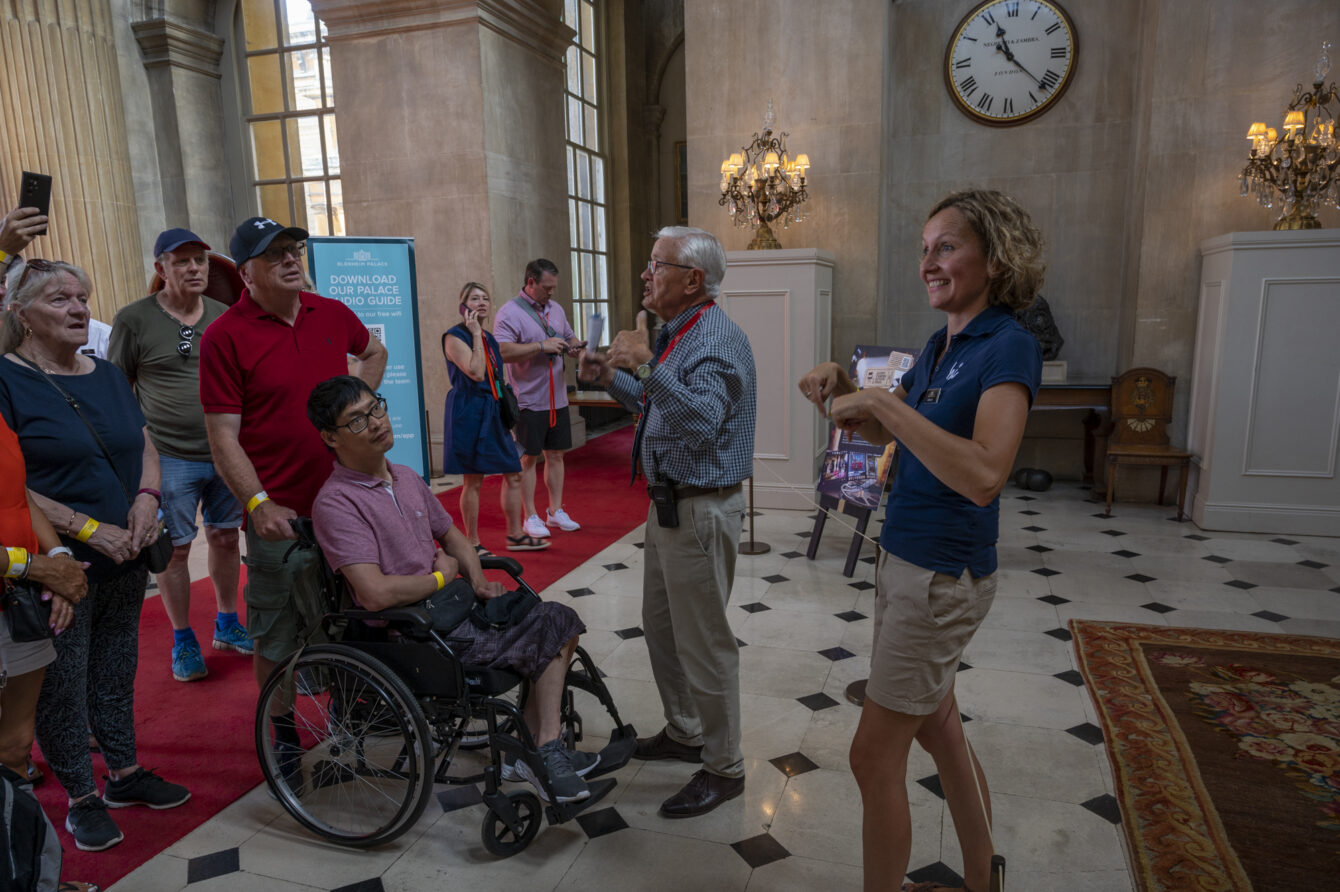
Heritage attraction and UNESCO World Heritage Site, Blenheim Palace, has announced an important collaboration with Heritage Interpreters and City Lit College to establish a training programme for deaf-led heritage tours.
The joint initiative to address a gap in accessibility and representation for the deaf community in the English heritage sector is raising awareness of the lack of a formalised training pathway for British Sign Language (BSL) tour guides within heritage attractions.
Following the success of four pilot deaf-led BSL tours in 2025 and 2026 with John Wilson as the Deaf BSL Guide, Blenheim Palace is now spearheading a movement to ensure that the nation’s history is shared authentically and inclusively.
The new programme is designed to equip deaf individuals with the professional skills required to lead tours at major historical sites. Applications for the training will open in April 2026 via the Heritage Interpreters website, with the comprehensive course set to commence at Blenheim Palace in September 2026. By hosting this training, Blenheim Palace aims to create a sustainable pipeline of BSL guides who can eventually support other heritage attractions across the country.
Heather Carter, Managing Director of Visitor Attraction at Blenheim Palace, said: “Despite successful training courses for deaf BSL guides, taught by deaf tutors in the past, the demand for training has always exceeded the supply and training has waned in the last decade.
“At Blenheim Palace we are committed to making our attraction and its history as accessible as possible, and this special partnership to create a programme to train more BSL deaf tour guides is a natural and vital progression for us. We are excited that other heritage attractions will then be able to share this valuable resource.”
John Wilson, deaf BSL Guide and Lecturer, added: “Deaf-led BSL Tours in museums, galleries and historic sites are happening right now all over the United Kingdom. Deaf guides are leading face-to-face tours without assistive technology to deaf audiences in their own language, British Sign Language (BSL), including stories which embrace deaf history, deaf culture and deaf art, thus expanding their knowledge and discovering new perspectives. I look forward to working collaboratively with Blenheim Palace to increase deaf participation and access across the heritage sector.”
This partnership emphasises Blenheim Palace’s dedication to social responsibility and its role as a leader in cultural heritage. By fostering an environment where deaf-led narratives are the standard rather than the exception, Britain’s Greatest Palace is ensuring that the shared heritage truly applies to everyone.
For further information regarding the training programme and the partners involved, please visit Heritage Interpreters www.heritageinterpreters.co.uk and City Lit www.citylit.ac.uk.
For more information about Blenheim Palace, visit www.blenheimpalace.com
ENDS


